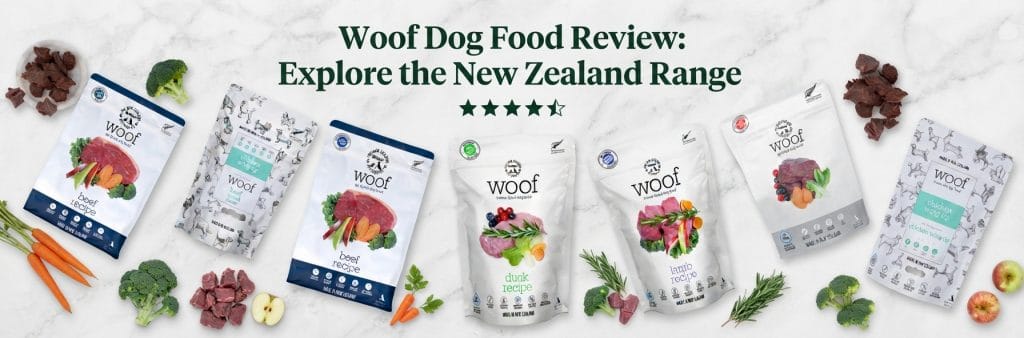
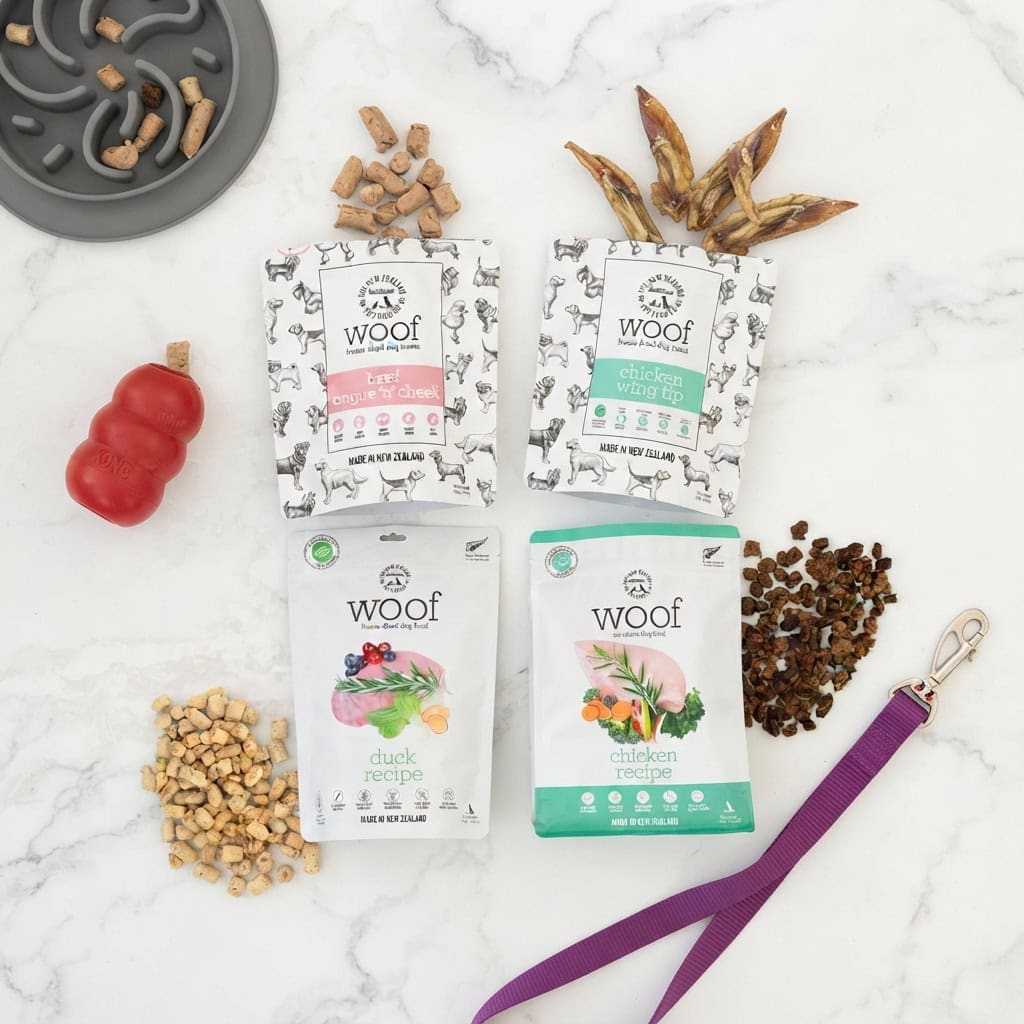
If you're looking beyond conventional kibble but aren't quite ready for the mess, freezer space, and extra preparation that can come with traditional raw feeding, This brand caught my attention for one big reason: its unusually broad selection of animal proteins. In this Woof dog food review, I take a closer look at what makes the brand different and whether its air-dried and freeze-dried recipes are worth considering.
Instead of relying solely on familiar proteins like chicken and beef, they offer options including wild goat, wild venison wild brushtail, duck,lamb, and green-lipped mussels. Various recipes also incorporate ingredients such as lamb green tripe, organ meats, hoki oil, coconut oil, kelp and New Zealand manuka honey.
I find them particularly interesting because it comes in two convenient formats: air-dried and freeze-dried. Both provide a less conventional alternative to highly processed kibble while making feeding considerably easier than handling fresh raw meat. For pet parents interested in raw-inspired nutrition without the practical challenges of a freezer-dependent diet, these formats offer a convenient middle ground.
My overall impression: Woof stands out for its meat-forward recipes, unusual New Zealand proteins, and flexible air-dried and freeze-dried formats. The biggest drawbacks are the premium price and the fact that its nutrient-dense formulas can be calorie-heavy, so portion control matters.
Pros
Made in New Zealand
Both air-dried and freeze-dried formats
Convenient alternative to traditional raw feeding
Strong palatability appeal based on customer feedback
Meat, organs, and other animal-derived ingredients feature prominently in many recipes
Wide variety of animal proteins, including novel options such as wild goat, wild venison and wild brushtail
Grain-free and free from corn, soy and wheat in the recipes reviewed
Meat, organs, and other animal-derived ingredients feature prominently in many recipes
Can be fed as a complete meal or used as a topper, depending on the product and feeding instructions
Cons
Some recipes are very calorie-dense
Not every dog needs a raw-style or minimally processed diet
Considerably more expensive than conventional kibble
Small bags can make the cost noticeable for large or multi-dog households
Freeze-dried food requires careful handling and can benefit from rehydration
Novel proteins aren't automatically appropriate for dogs with diagnosed food allergies
Final Score: 9.1/10
I gave Woof a 9.1/10 based on ingredient variety, protein quality, processing methods, convenience, and overall nutritional profile. Its price keeps it from scoring higher, especially for owners feeding large dogs exclusively on premium food.
Its dog-food range focuses heavily on animal ingredients and includes both freeze-dried and air-dried products. Their freeze-dried recipes are designed to retain the characteristics of raw ingredients while removing moisture, while the air-dried range offers a more convenient shelf-stable format.
A 2026 Dogster review similarly highlighted Woof's variety of recipes and drying methods, noting that the foods can be served as meals or incorporated into an existing diet.
Arrival of Woof dog food
What I Like About the Ingredient Philosophy
When I look at a premium dog food, I don't just look at the first ingredient. I want to know what the overall recipe is doing.
With them, I like seeing combinations of:
Muscle meat
Organ meats
Ground bone in applicable recipes
Lamb green tripe
New Zealand green-lipped mussel
Hoki oil
Kelp
Vegetables and berries
Coconut oil
Manuka honey in selected recipes
For example, the Wild Goat recipe lists wild goat with ground bone alongside lamb heart, green tripe, liver, kidney, vegetables, green mussel, honey, coconut oil and hoki oil. One listed formulation provides a minimum of 44% crude protein and 26% crude fat as-fed, illustrating just how nutrient-dense these foods can be.
Woof Dog Food Review
1. Venison Air Dried
First 5 ingredients:
Venison, Lamb, Lamb Green Tripe, Lamb Heart, Lamb Liver
This air-dried dog food features a nutrient-dense blend of grass-fed, free-range venison and quality lamb ingredients, including lamb green tripe, heart, liver, kidney and ground lamb bone. The recipe is rounded out with wholesome fruits and vegetables such as bok choy, carrots, blueberries and cranberries, providing a variety of naturally occurring nutrients and antioxidants.
It also includes several nutrient-rich additions, including manuka honey, organic virgin coconut oil, kelp, New Zealand green mussel and hoki oil. These ingredients provide sources of beneficial fatty acids, vitamins, minerals and other nutrients that can support overall health, while green mussel and hoki oil add valuable omega-3 fatty acids to the recipe.
For dogs with dietary sensitivities, the limited-ingredient approach may be appealing. It contains no gluten, grains, corn, soy, GMO ingredients, artificial preservatives, artificial flavors or unnecessary fillers. Overall, this air-dried formula offers a convenient, meat-forward option for pet parents looking for a simple recipe built around natural animal proteins and nutrient-rich whole-food ingredients.
2. Beef Air Dried
First 5 ingredients:
Venison, Lamb, Lamb Green Tripe, Lamb Heart, Lamb Liver
Combining the rich taste of fresh, raw-style nutrition with the convenience of a shelf-stable formula. Made in small batches, the gentle air-drying process helps preserve the ingredients while minimizing the need for heavy processing, making it an easy option for pet parents who want to offer their dogs a meat-forward diet.
Grass-fed, free-range beef provides a highly palatable source of animal protein to support healthy muscles and everyday energy. The recipe is balanced with fresh fruits, vegetables, and nutrient-rich superfoods, adding a variety of vitamins, minerals, antioxidants, and other naturally occurring nutrients to complement the beef-based formula.
Overall, this kibble offers a convenient alternative to refrigerated or frozen raw food while keeping the focus on quality animal protein and wholesome ingredients. Its small-batch preparation and air-dried format make it particularly appealing for pet parents looking for a nutritious, easy-to-serve option without sacrificing the appeal of a fresh, raw-inspired diet.
3. Wild Goat Freeze-Dried Raw
First 5 ingredients:
Wild Goat with ground bone, Lamb Green Tripe, Lamb Liver, Lamb Kidney, Bok Choy
This freeze-dried raw dog food offers a convenient way to serve a complete and balanced meal with the rich nutrition of wild goat, lamb organs and other recognizable ingredients. Made in small batches, the recipe contains 90% meat, organs and bones, providing a protein-rich foundation that is complemented by fresh fruits and vegetables, including bok choy, carrots, blueberries and cranberries.
The formula is further enhanced with nutrient-dense additions such as kelp, New Zealand green-lipped mussel, manuka honey, organic virgin coconut oil, rosemary and hoki oil. These ingredients contribute a variety of naturally occurring vitamins, minerals, antioxidants and beneficial fatty acids to the overall nutritional profile.
Simply add water when preparing it as a meal, or serve it dry as a tempting topper or tasty treat. The freeze-dried format makes it easy to store and serve while retaining the appeal of a raw-style diet.
4. Wild Brushtail Freeze-Dried Raw
First 5 ingredients:
Wild Brushtail with ground bone, Lamb Heart, Lamb Green Tripe, Lamb Liver, Lamb Kidney
This tasty raw food features wild brushtail as a distinctive novel animal protein, paired with nutrient-rich lamb organs including heart, green tripe, liver and kidney. Brushtail refers to the common brushtail possum, a cat-sized marsupial native to Australia that was introduced to New Zealand and is now widespread there.
The limited-ingredient recipe contains more than 90% meat, organs and bones, providing a highly protein-focused foundation that is balanced with fruits and vegetables such as bok choy, carrots, blueberries and cranberries. It is also enhanced with kelp, New Zealand green mussel, manuka honey, organic virgin coconut oil, rosemary and hoki oil for additional nutrients and beneficial fatty acids.
A gentle freeze-drying process helps preserve the food's raw-style taste and naturally occurring nutrients without cooking the ingredients. It can be rehydrated and served as a complete meal or used as a topper, mixer, or treat, making it a versatile option for dogs whose owners are looking for an alternative protein source.
These treats are made with grass-fed, free-range lamb, including lamb green tripe, heart, liver, kidney and ground lamb bone. The high-protein recipe contains more than 90% meat, organs and bones, complemented by wholesome plant ingredients such as broccoli, carrots, apple, kale and kelp.
The freeze-drying process helps preserve the ingredients' natural flavor and nutrients without the cooking step that can alter some heat-sensitive components. The treats can be served straight from the bag as a convenient reward or easily rehydrated with water for a softer, meatier texture.
For dogs with dietary sensitivities, the simple ingredient profile may be appealing. The recipe contains no gluten, grains, corn, soy, GMOs, artificial preservatives, artificial flavors or fillers. However, dogs with known food allergies should have the full ingredient list reviewed with a veterinarian before introducing a new treat, particularly because this formula contains multiple lamb-derived ingredients.
Handling note: Because these are raw, freeze-dried treats, they should still be handled with appropriate food-safety practices. Wash your hands and clean bowls, utensils and preparation surfaces after handling, and avoid leaving rehydrated portions at room temperature for extended periods. Store the product according to the manufacturer's directions and keep it away from children and other foods to help reduce the risk of cross-contamination.
These tasty snacks are made with natural ingredients and offer a simple, meat-based option for rewarding your dog between meals. Featuring nutrient-rich beef green tripe, the treats provide naturally occurring proteins and other nutrients while delivering an appealing savory flavor that many dogs enjoy.
The grain-free and gluten-free recipe makes them a convenient choice for pet parents looking to avoid these ingredients in their dog's treats. Green tripe naturally contains protein and other nutrients that can complement a balanced diet. While it may contribute nutrients relevant to overall joint and connective-tissue health, these treats should not be considered a treatment for arthritis, joint disease or mobility problems.
For dogs with specific food allergies or dietary sensitivities, it is still important to review the complete ingredient list before introducing any new treat. These treats should be offered in moderation and alongside a complete, balanced diet rather than used as a replacement for regular meals.
Boasting the sustainably farmed New Zealand green-lipped mussels, it offers a concentrated source of animal-based protein and naturally occurring omega-3 fatty acids. Green-lipped mussels are also naturally rich in glucosamine and chondroitin, nutrients commonly associated with maintaining healthy joints and normal mobility.
The omega-3 content can also complement a balanced diet that supports healthy skin and a shiny coat, while the mussels provide a variety of naturally occurring nutrients that contribute to overall wellness. Their convenient freeze-dried format makes them easy to serve as a high-value treat or occasional topper.
While the nutrients in green-lipped mussels may support normal joint function, they should not be considered a treatment for arthritis or other joint conditions. Likewise, these treats can complement—not replace—a complete and balanced diet for supporting immune function, skin and coat health.
Featuring real manuka honey, a naturally nutrient-rich ingredient that contains antioxidants and naturally occurring enzymes. Manuka honey is also known for its antimicrobial properties, making it a distinctive addition to a dog's treat routine.
It is prepared in a raw format rather than cooked, helping retain the ingredients' natural characteristics. It can be served on their own as an occasional snack or mixed into your dog's regular food as a tasty topper.
It can be a gentle snack option for dogs with sensitive stomachs, while manuka honey’s natural antimicrobial properties may also make it an interesting ingredient for topical applications—but wounds or sores should only be treated with products recommended by your veterinarian.
A close look at the texture of Woof air-dried dog food
Unique Protein Sources
One of the strongest reasons I would consider Woof is its unusual protein selection.
Wild Goat
Wild goat is one of the more unusual proteins in commercial dog food.
For dogs that have eaten the same conventional proteins repeatedly, a genuinely different protein source can provide dietary variety. However, I would not automatically call goat a “hypoallergenic” ingredient. Dogs can develop allergies to many different proteins.
The Wild Goat recipe I reviewed also combines goat with lamb organs and green tripe, making it more than simply a single-meat recipe.
Wild Venison
Venison is another protein that can be useful for adding variety.
It is naturally protein-rich and can be particularly interesting for owners who want an alternative to chicken or beef. The brand's Wild Venison formula includes venison alongside lamb, lamb green tripe, heart, liver, kidney, bone, vegetables, green mussel, honey, coconut oil and hoki oil.
One important distinction: if your dog has a medically diagnosed food allergy, I would use novel-protein diets under veterinary guidance rather than simply choosing a food because the protein sounds unusual.
Wild Brushtail
Wild brushtail is probably one of the most unusual proteins in their range.
For owners interested in expanding protein variety, this is a distinctive option that isn't commonly found in mainstream dog foods.
The recipe also pairs brushtail with lamb green tripe, lamb liver and kidney, vegetables, kelp, New Zealand green-lipped mussel, Manuka honey, coconut oil and hoki liver oil.
Duck
Duck provides another poultry option for dogs that enjoy poultry but may need something different from the usual chicken formula.
This recipe combines duck and chicken with lamb green tripe, duck liver, vegetables, berries, chia seeds, kelp, green-lipped mussel, Manuka honey, coconut oil and hoki liver oil.
Because chicken is also present, I would not use this particular recipe as a strict chicken-elimination diet.
Beef
Beef is the familiar option in the range.
It's a practical choice for dogs that tolerate beef well, although it doesn't provide the novelty of the wild-protein recipes.
Customer feedback on this air-dried food frequently mentions palatability, with some owners describing it as particularly appealing to picky eaters. Customer reviews also repeatedly mention the food's premium price and relatively small bags.
Chicken
Chicken is probably the easiest protein for most owners to recognize and is useful if your dog already does well with poultry.
However, chicken is also one of the more commonly encountered food proteins, so I wouldn't choose it specifically because you are looking for a novel protein.
Lamb
Lamb appears both as a primary protein in certain recipes and as part of the supporting animal ingredients in some of the more unusual formulas.
Its inclusion alongside green tripe, heart, liver and kidney is one reason the ingredient lists look considerably different from conventional kibble.
Green-Lipped Mussels
This is one of the ingredients I pay particular attention to.
New Zealand green-lipped mussels naturally provide marine fatty acids and other compounds associated with joint support. Veterinary sources note that green-lipped mussel has shown promising evidence for dogs with degenerative joint disease, although it shouldn't be treated as a substitute for veterinary treatment.
Comparing the texture of Woof air-dried and freeze-dried recipes
What Are the Potential Health Benefits of Woof Dog Food?
I want to make an important distinction here: there isn't evidence showing that Woof itself will produce specific medical improvements in every dog.
What we can do is look at the nutrients supplied by its ingredients and the improvements owners may reasonably notice when a dog moves from a less suitable diet to a nutritionally appropriate one.
1. Healthier-Looking Skin and Coat
High-quality protein and appropriate dietary fats are important for normal skin and coat maintenance.
Their recipes containing fish-derived oils provide omega-3 fatty acids. EPA and DHA have recognized roles in supporting healthy skin and moderating inflammatory processes. Veterinary guidance notes that omega-3s can be useful for dogs with certain skin conditions, although the appropriate dose depends on the individual dog.
What I would watch for: A healthier-looking coat, less dry skin and improved coat texture over time.
2. Joint Support
The inclusion of New Zealand green-lipped mussel is particularly interesting for active, aging or joint-sensitive dogs.
Green-lipped mussels contain omega-3-related compounds and other nutrients that have been studied for joint support. Veterinary sources describe promising evidence, although the amount provided by a particular food isn't necessarily equivalent to a therapeutic supplement dose.
What I would watch for: Normal mobility, willingness to exercise and comfortable movement.
3. Digestive Health
Their recipes include animal ingredients such as lamb green tripe as well as plant ingredients such as kelp and vegetables.
A diet that supplies highly digestible protein and appropriate nutrients may support normal digestion, but individual dogs can respond differently to dietary changes.
What I would watch for:
Consistent stool quality
Normal appetite
Less digestive upset after the transition period
Good overall body condition
4. Maintaining Muscle and Energy
The high protein content of some their formulas can be useful for supporting normal muscle maintenance when the food is appropriately portioned.
For example, the listed Wild Goat recipe provides a minimum of 44% crude protein as-fed.
That doesn't mean “more protein is always better.” Dogs need a complete and balanced nutrient profile appropriate to their life stage, health status and energy requirements.
5. Dietary Variety
This is arguably the brand's biggest practical advantage.
Rotating appropriate proteins can give owners more options when a dog becomes bored with one recipe or when dietary preferences change.
However, dogs with confirmed food allergies are a different situation. An elimination diet needs to be carefully controlled, and simply rotating multiple proteins can make identifying a trigger more difficult.
A typical serving portion prepared for my dog
Two Food Lines: Air-Dried vs. Freeze-Dried
One of the things I like most about them is that you aren't locked into a single format.
Air-Dried
Air-drying removes moisture gradually using controlled warm air. The result is a shelf-stable food with a texture that is generally closer to a dry or jerky-style food than traditional kibble.
My take on air-dried:
Convenient for everyday feeding
Easy to portion
No freezer required
Less preparation than traditional raw food
Useful as a meal or topper, depending on the product
Generally easier for owners who want a raw-style diet without handling raw meat
Air-drying is considered a relatively gentle processing method compared with conventional high-temperature cooking, although the nutritional quality of any dog food still depends on the complete formulation rather than the processing method alone.
Freeze-Dried
Freeze-drying removes moisture at low temperatures while preserving much of the original structure, aroma and nutrient profile of the ingredients.
Their freeze-dried recipes are particularly appealing if you're looking for a raw-style diet without keeping fresh raw meat in your refrigerator.
Some products can also be rehydrated with water. A current review of the range notes that the food can be served as-is or soaked for roughly 10 minutes for a softer, meatier texture.
Air-Dried vs. Freeze-Dried: My Comparison
Feature
Air-Dried
Freeze-Dried
Processing
Gentle air drying
Freeze drying
Convenience
Excellent
Excellent
Freezer required
No
No
Raw-style characteristics
Yes
Yes
Texture
Firm/chewy dry pieces
Light, porous pieces
Rehydration
Optional
Often useful
Storage
Pantry
Pantry
Best use
Everyday convenience
Raw-style meal/topper
Protein variety
Very good
Excellent, including unusual recipes
For me, air-dried wins on everyday convenience, while freeze-dried wins when I want the closest practical alternative to a raw-style feeding experience.
Woof vs. Traditional Raw Dog Food
Traditional raw diets generally involve refrigerated or frozen raw meat, organs and other ingredients that need careful storage and handling.
WOOF takes a different approach.
Factor
Woof
Traditional Raw
Storage
Pantry
Usually refrigerator/freezer
Preparation
Minimal
More involved
Thawing
Not required
Usually required
Mess
Relatively low
Potentially higher
Convenience
High
Lower
Raw-style nutrition
Yes
Yes
Protein variety
Very broad
Depends on supplier
Food safety handling
Easier than fresh raw
Requires careful raw-meat handling
Travel
Convenient
More difficult
Cost
Premium
Varies widely
I see the company as a bridge between conventional kibble and traditional raw feeding.
It gives owners access to unusual animal proteins and minimally processed formats without requiring them to buy, thaw, portion and clean up after fresh raw meat every day.
However, freeze-drying does not make a raw-style diet automatically pathogen-free. PetMD notes that freeze-drying does not eliminate all pathogens, so appropriate handling and hygiene remain important.
What I Noticed About Palatability
Palatability is one area where the company seems to perform particularly well in customer feedback.
Current customer reviews include multiple reports of picky dogs readily accepting the food, while other reviews praise its texture and use as a topper.
That doesn't mean every dog will love it. Dogs are individuals, and even highly palatable foods can be rejected by a particularly selective eater.
Still, the combination of meat-forward recipes, organ meats and unusual proteins gives plenty of aroma and flavor appeal.
Is Woof Dog Food Worth the Price?
Yes, potentially — but I wouldn't call it a budget dog food.
It makes more sense for owners who specifically want premium, meat-forward, air-dried or freeze-dried food and are willing to pay for the convenience.
In the U.S., the brand is positioned as a premium option, with prices varying by recipe, format, and package size. Freeze-dried and air-dried formulas typically cost significantly more than conventional kibble, so feeding it as a full-time diet can add up quickly, especially for larger dogs. Prices also vary between retailers and may change with promotions or subscriptions.
I would consider it more cost-effective when used:
As a complete meal for smaller dogs
As a topper for kibble
For picky eaters
During travel
As part of a rotational feeding plan
For a large dog eating only this, the monthly food bill can become substantial.
Can You Mix It With Other Foods?
Yes. It can be mixed with other appropriate dog foods when the overall diet remains nutritionally balanced.
It can be used as:
A complete meal
A topper
A mix-in with kibble
Part of a rotational diet
A high-value addition for picky eaters
A recent article specifically noted that it can be mixed with kibble and used according to the product's feeding guidance.
The important part is portion control. Adding a calorie-dense food on top of a complete diet without reducing the main food can contribute to excess calorie intake.
How Do You Transition Your Dog?
Transition gradually over about 7–10 days rather than changing foods overnight.
A simple approach is:
Days 1–2
Feed approximately 25% Woof and 75% of the previous food.
Days 3–4
Move to approximately 50% Woof and 50% previous food.
Days 5–7
Increase to approximately 75% Woof and 25% previous food.
Day 8 onward
If your dog is doing well, move toward 100% Woof according to the feeding guide.
If your dog develops persistent vomiting, diarrhea, significant appetite loss or other concerning symptoms, stop the transition and contact your veterinarian.
The current support center includes options for order management, subscriptions, shipping, returns, ingredients and nutrition, warranties and general help. There is also a contact form where you can submit your name, email, subject, message and attachments.
For order-specific questions, I would have the order number and product information ready before contacting the company.
Who Is Woof Best For?
I think it is particularly interesting for:
Dogs that enjoy meat-forward foods
Picky eaters
Owners looking for unusual protein sources
Dogs whose owners want to move away from conventional kibble
Owners who want raw-style feeding without refrigeration
Travelers who need a convenient premium food
Owners interested in air-dried or freeze-dried diets
I would be more cautious with dogs that have diagnosed medical conditions requiring a therapeutic diet, dogs with pancreatitis or other fat-sensitive conditions, and dogs undergoing a veterinarian-supervised elimination diet.
The high fat and calorie density of some recipes also means portion sizes deserve attention.
Enjoying her Woof treatos
Final Takeaway
After looking closely at the recipes, protein selection, processing methods and nutritional ingredients, I can see why it has attracted attention from owners looking for an alternative to traditional kibble.
The biggest attraction for me is the protein variety. Wild goat, wild venison and wild brushtail are far less common than the chicken, beef and lamb found across the mainstream dog-food aisle. The addition of green-lipped mussel, organ meats, green tripe and fish-derived oils gives the recipes another nutritional dimension.
The two processing options also make the brand practical. Air-dried line is convenient for everyday feeding, while freeze-dried line offers a particularly appealing raw-style alternative without requiring a freezer.
That said, premium ingredients don't automatically make a food medically superior for every dog. A complete and balanced diet appropriate for your dog's age, size, activity level and health status is still the priority. And while ingredients such as omega-3s and green-lipped mussel have legitimate nutritional interest, I would avoid promising that it will cure allergies, arthritis, digestive disease or other medical problems.
For owners who value unusual proteins, meat-forward recipes and the convenience of shelf-stable feeding, it is a compelling premium option worth considering. Its biggest weakness is simply the price — particularly if you're feeding a large dog exclusively on it.
How useful was this post?
Click on a star to rate it!
Average rating 0 / 5. Vote count: 0
No votes so far! Be the first to rate this post.
As you found this post useful...
Follow us on social media!
We are sorry that this post was not useful for you!
A freelance writer and huge animal advocate, with 6 dogs and 3 cats. Graduated with a medical degree and is now spending time running a shelter and rescuing animals in need. Loves a good book, travel and spend time with family and pets.